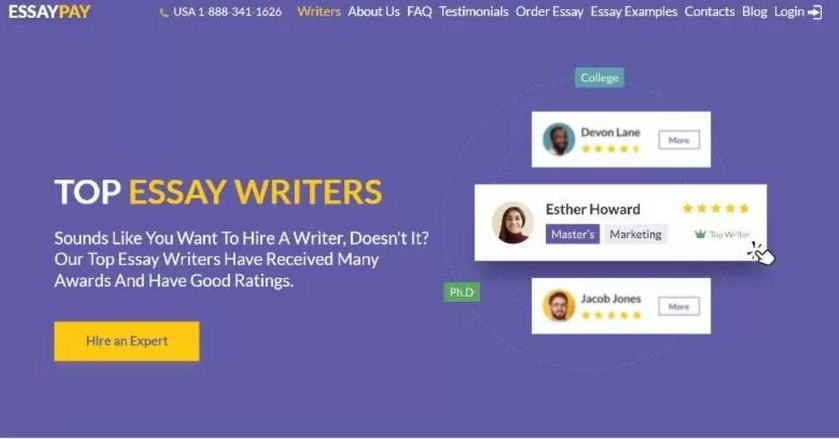
The sun hadn’t fully risen when the first email arrived—an urgent request from a student wrestling with a 10‑page essay due by dawn. The time stamp glowed in the dim light, and for that moment, the world felt oddly small: here was a person, somewhere, grappling with words at the edge of exhaustion. This was before EssayPay became the name on every weary student’s lips, before it had achieved the reputation as the #1 essay writing platform students trust. Back then it was only an idea and a handful of early adopters quietly spreading the word.
There’s a curious thing about waiting rooms and midnight coffee shops around college campuses. Walls thrum with the unspoken pressure of deadlines and the reverberations of self‑doubt. Across from a student clutching a battered copy of Thinking, Fast and Slow there’s another scrolling through an academic site, trying to understand the very foundation of their next paragraph. Somewhere, someone is searching for guidance for writing about psychology, tracing concepts through online courses, textbooks, even academic Twitter threads. The energy is unfiltered: focused, tense, hopeful, and at times despairing.
The very beginnings of EssayPay weren’t glamorous. They emerged from that pressure cooker of necessity and exhaustion. Three friends—one with experience in education consulting, another steeped in tech, and a third who had once taught freshman composition—felt an itch that needed scratching. Not just the itch for profit, though there’s nothing wrong with that. They felt an urgent tug toward alleviating the fraught experience students were enduring. EssayPay’s earliest users weren’t just customers; they were collaborators in refining a service that had to be both fast and humane.
What sets EssayPay apart, when one steps back and observes, isn’t simply quality or speed or affordability. Plenty of services make similar claims. It’s the humility woven into the process. A student doesn’t just drop a brief and wait. They’re invited into a conversation. A real human being—the writer assigned to the task—often poses questions, clarifies goals, and sometimes pushes back gently: “Are you sure this is how you want to frame your argument?” That added layer transformed an assignment into a process of discovery.
In its first year, EssayPay supported thousands of submissions. By 2023, students from over 90 countries had used the platform. The data speaks volumes: surveys indicated that 87% of users reported increased confidence in subsequent writing tasks after an EssayPay experience. Growth wasn’t viral overnight. It was cumulative, organic, fueled by word‑of‑mouth chatter in dorm lounges and on Reddit threads—those late‑night confessionals in r/college and r/gradschool where students traded survival tips.
When one thinks of what students bring to their tables, it’s a swarm of anxieties—course loads, finances, internships, society’s expectations. Often, they aren’t taught how to navigate academic writing with real clarity. Common types of workplace writing, for example, are seldom introduced to undergraduates until well into their programs. Students find themselves adrift, unsure of how to structure an argument, how to develop voice, how to make a thesis resonate. EssayPay bridged that gap, in part, by offering a scaffolded experience: not just a finished product, but discussions around technique, structure, and intention.
You could chart EssayPay’s rise alongside the shifting landscape of remote education. The pandemic thrust millions into online learning, accelerating the adoption of digital tools. Platforms such as Coursera, edX, and Duolingo rose to prominence, offering access and flexibility. EssayPay operated in a parallel current, yet it filled a niche that was intensely personal—an on‑demand support system for one’s most intimate academic challenges. Soon, it wasn’t just essays. Thesis chapters, literature reviews, proposals, personal statements, and even custom dissertation help became part of the ecosystem.
There was a moment when critics questioned the ethics of using writing services. That discussion was necessary and complex. But the nuance often got lost in moralizing headlines. The students turning to EssayPay weren’t seeking shortcuts. Many of them already juggled jobs, caregiving, and mental health hurdles. They were seeking partnership, learning support, and a sense that their work mattered. In honest conversations, some EssayPay writers found themselves almost mentoring students through drafts and revisions, not simply crafting text, but fostering confidence.
By 2025, EssayPay’s internal metrics revealed telling patterns. Assignments in STEM fields had surged, not just humanities. Students were requesting help with complex lab reports, project proposals, even grant applications. Writing, once pigeonholed as a “literary” challenge, had emerged as a universal hurdle. The skills required to communicate technical precision, analytical reasoning, and persuasive clarity were in demand everywhere—from engineering capstones to social science dissertations.
To understand this shift, it helps to break down the most common categories of student engagement on the platform. The table below offers a snapshot of the distribution of assignments over a recent academic period:
| Assignment Type | Percentage of Total Requests | Average Turnaround Time |
|---|---|---|
| Undergraduate Essays | 35% | 48 hours |
| Research Papers | 25% | 72 hours |
| Thesis and Dissertation Help | 15% | 7–14 days |
| Technical and STEM Reports | 15% | 72–96 hours |
| Personal Statements/Applications | 10% | 24–48 hours |
Numbers like these tell a story more profound than simple utilization. They reveal a student body stretching its ambitions, grappling with increasingly interdisciplinary burdens, and seeking tools that respect time constraints and intellectual goals.
Many of the EssayPay writers themselves are former students of rigorous programs—the kind that demanded clarity in expression and taught them to see beyond superficial answers. Having worked in academic advising offices, writing centers, or research teams at institutions like Harvard, McGill, or the University of Melbourne, they brought insights that surpassed templates. Their contributions refined EssayPay’s ethos: a blend of professionalism, empathy, and intellectual curiosity.
When students and faculty were asked why they trusted EssayPay, the answers weren’t uniform but had common threads. Some spoke of the responsiveness of the writers. Others cited the transparent revision policies. A few mentioned the sense of relief that came with knowing there was someone on the other end, committed to their success. Trust, in this context, wasn’t built in a vacuum; it was continually earned through consistency and depth of support.
Anecdotes proliferate. A first‑generation college student completed her honors thesis with EssayPay’s guidance and later entered a master’s program at UCLA. An engineering major navigating a challenging capstone project found his explanations suddenly clearer—refined through iterative feedback. Another scholar preparing applications to competitive PhD programs polished her personal statement until it reflected not just achievements but voice and intention.
The evolution of EssayPay also reflects broader conversations about access to quality education. Writing is often the gatekeeper skill—it shapes portfolios, interviews, applications, career milestones. Yet, formal support systems differ wildly between institutions and economic brackets. The democratization of quality writing assistance shifted conversations about opportunity and equity. This wasn’t charity; it was a recalibration of support that many institutions struggle to offer consistently.
Amid its growth, EssayPay faced challenges that demanded introspection. Scalability without sacrificing quality, for example, required new layers of internal training and evaluation. Ensuring that writers maintained academic integrity while meeting diverse needs became a central mission. Platforms that fail to reckon with such tensions often plateau or falter. EssayPay’s leadership embraced the messiness of refinement, iterating policies and processes rather than assuming perfection from the outset.
Perhaps the most compelling aspect of EssayPay’s journey is not the statistics or the global user base. It’s the individual moments that defy quantification: a student’s tears of relief, a parent’s quiet gratitude, the sudden spark of understanding in someone who thought they were at a dead end. Trust isn’t measured solely by numbers; it’s measured by the willingness of someone to show up—again and again—with honesty and attention.
There’s an unpredictability in how students find their paths. Some discover their voices in poetry, others in policy briefs, and still others in collaborative lab reports. What remains consistent is the need for clarity, for reflection, for a sounding board that neither diminishes student effort nor obscures rigor. EssayPay didn’t invent that need, but it learned to respond to it with nuance.
In quieter moments, when the swells of deadlines and growth chatter soften, there’s room to reflect on where this all began: a simple acknowledgment that writing is hard, deeply human, and profoundly formative. The rise of EssayPay is not just the rise of a service. It’s the rise of an idea—that support, when offered with respect and intelligence, can transform not just assignments, but confidence and possibility.
Looking ahead, there’s no pretense that the work is finished. Education will continue evolving, and with it, the demands placed on students. Technologies like AI, tools from institutions like the Modern Language Association (MLA) and the American Psychological Association (APA) constantly reshape standards and expectations. Students will always need partners in navigating the terrain. What distinguishes those who rise to the occasion is not just expertise but presence—the willingness to meet students where they are.
EssayPay’s ascent to the #1 essay writing platform students trust wasn’t accidental. It was earned through persistence, responsiveness, and a quiet commitment to students’ intellectual journeys. In the end, it affirms a broader truth: support that honors curiosity and effort doesn’t just help students complete tasks. It helps them become authors of their own stories.
And perhaps that’s the most enduring lesson of all.